

In copyright
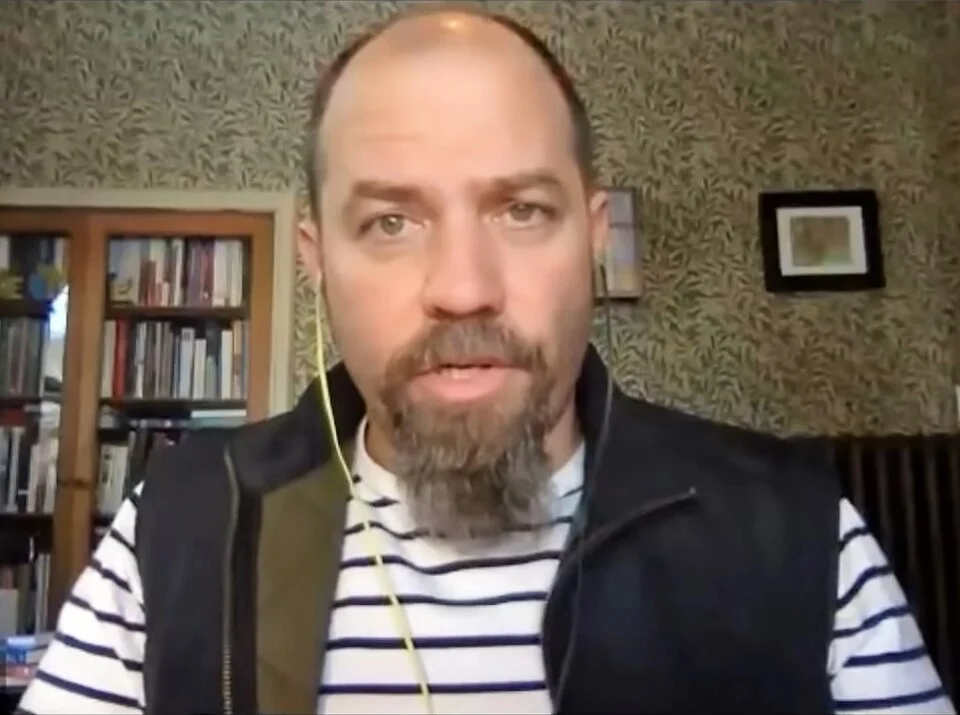
James K. A. Smith
b. 1970
Also known as: Jamie Smith, James K.A. Smith, James Smith
Reformed — Philosophy/Formation
James Kingsley Andrew Smith was born in 1970 in southwestern Ontario, Canada, where he was raised in the Christian Reformed tradition. His early spiritual formation occurred within the immigrant Dutch-Canadian Reformed community, a context that would later inform his philosophical work on tradition, embodiment, and cultural formation. He completed his undergraduate studies at Calvin College in Grand Rapids, Michigan, then pursued graduate work in philosophy at Villanova University, where he earned his PhD in 1999 under the direction of John D. Caputo, a leading interpreter of continental philosophy and postmodern thought.
Smith's intellectual trajectory represents an unusual convergence: a Reformed confessional commitment wedded to continental philosophical methods, particularly phenomenology and deconstruction. His doctoral work focused on Jacques Derrida, the French deconstructionist whose thought many evangelicals viewed with suspicion or outright hostility. Smith's early scholarship argued that postmodern philosophy, rather than threatening Christian faith, could actually serve it by dismantling the pretensions of autonomous reason that had marginalized religious belief since the Enlightenment. This thesis would become the foundation for much of his subsequent work.
In 2000, Smith joined the philosophy faculty at Calvin College (later Calvin University), where he founded the Cultural Discernment program and eventually became the Gary and Henrietta Byker Chair in Applied Reformed Theology and Worldview. His academic work spans philosophy, theology, and cultural criticism, but his influence extends well beyond the academy through his prolific writing for both scholarly and popular audiences. He has served as editor of Comment magazine and maintains an active public presence through speaking engagements and social media, where his Reformed perspective on contemporary cultural issues has garnered both devoted followers and sharp critics.
His Writing and Its Influence
Smith began writing seriously during his graduate studies, but his breakthrough work came with Introducing Radical Orthodoxy (2004), which introduced North American audiences to the Anglo-Catholic theological movement led by John Milbank and others. His trilogy on cultural liturgies—Desiring the Kingdom (2009), Imagining the Kingdom (2013), and Awaiting the King (2017)—established his reputation as a distinctive voice in contemporary Reformed thought. These works argue that human beings are fundamentally desiring rather than thinking creatures, shaped more by liturgical practices than by ideas, and that secular institutions like shopping malls and universities function as competing churches with their own formative rituals.
His earlier philosophical works, including Speech and Theology (2002) and The Fall of Interpretation (2000), demonstrated how postmodern insights could support rather than undermine Christian orthodoxy. Who's Afraid of Postmodernism? (2006) made this case accessible to a broader evangelical audience, arguing that Jacques Derrida, Jean-François Lyotard, and Michel Foucault were better friends to Christianity than many supposed. You Are What You Love (2016) distilled his academic work on desire and formation for pastors and lay readers, becoming one of his most widely read books.
Smith's influence has been particularly significant in Reformed circles, where his work has challenged both fundamentalist anti-intellectualism and liberal accommodationism. His emphasis on embodied practices and cultural formation has shaped discussions in Christian education, church liturgy, and public theology. Critics within his own tradition have questioned his appropriation of continental philosophy and his sometimes dismissive attitude toward propositions and cognitive content in Christian formation. Progressive critics have challenged his complementarian views on gender and his skepticism toward certain forms of social justice activism.
His more recent works, including On the Road with Saint Augustine (2019) and How to Inhabit Time (2022), show a turn toward more explicitly spiritual and pastoral concerns, though always informed by his philosophical training and cultural analysis.
Works by James K. A. Smith
Begin with You Are What You Love, the short popular version of his argument that we are shaped by what we love and that worship retrains our loves. Then read On the Road with Saint Augustine and How (Not) to Be Secular; the Cultural Liturgies trilogy (Desiring the Kingdom, Imagining the Kingdom, Awaiting the King) gives the full academic case.
- Desiring the Kingdom 2009
- Devil Reads Derrida 2009
- Awaiting the King 2017
About & Related Works
Works about James K. A. Smith, plus compilations, editions and commentary — offered as resources, not as their own writing.
Influence
Who shaped James K. A. Smith, and who James K. A. Smith shaped. Each line is drawn from the research behind the catalogue; the evidence sits in the catalogue, not on this page.
Influenced by
- Augustine of Hippo 354–430 through On the Road with Saint Augustine
- Abraham Kuyper 1837–1920 through Letters to a Young Calvinist
- Charles Taylor 1931–2024 through How (Not) to Be Secular
- Alvin Plantinga 1932–?
- Oliver O'Donovan 1945–? through Awaiting the King
- John Milbank
Resources
- James K. A. Smith, official website Organization
- James K. A. Smith, Calvin University Biography
Catalog IDA.89KZX3.8