

In copyright
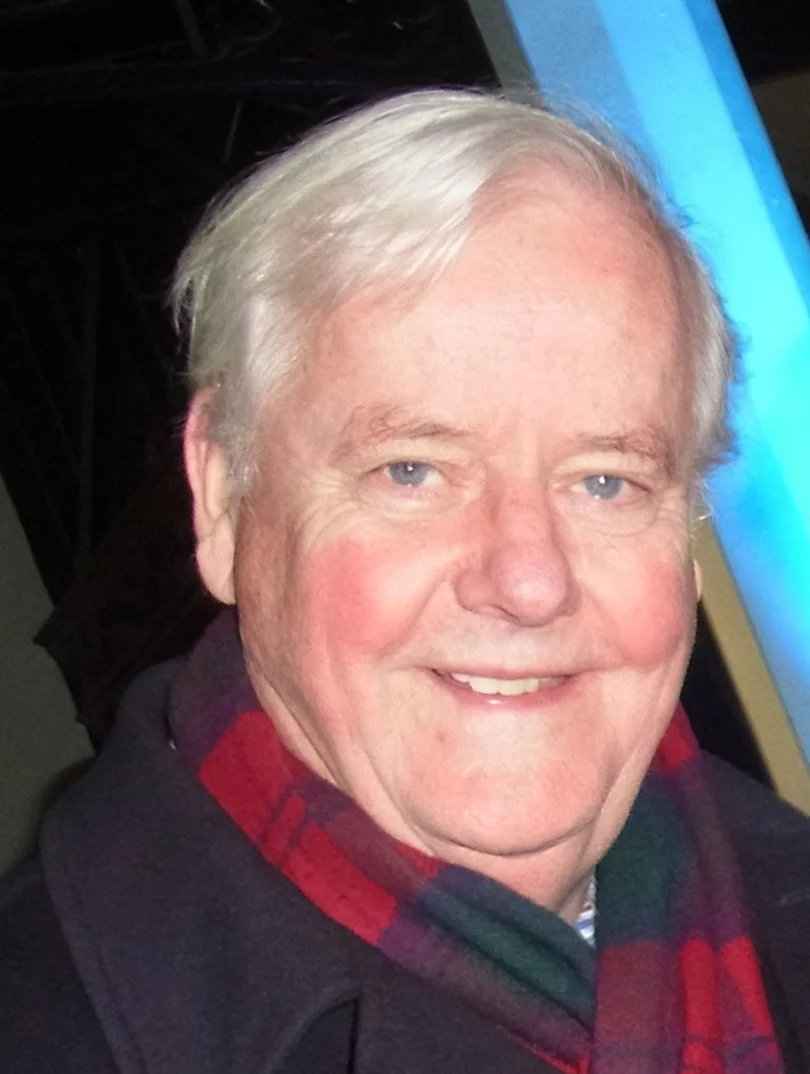
Os Guinness
b. 1941
Also known as: Arthur Os Guinness
Evangelical — Apologetics/Culture
Arthur Oswald Guinness was born in 1941 in China to medical missionary parents, descendants of the Dublin brewing family. His early years were marked by upheaval: the family fled China during World War II, and his father died when Os was fourteen. These experiences of displacement and loss would later inform his writing on the rootlessness of modern life. He was educated at the University of London, where he earned his doctorate in sociology, studying under prominent sociologists who were examining the secularization of Western culture. This academic formation proved crucial — Guinness would become one of evangelicalism's most sophisticated analysts of cultural change.
In the 1960s, while completing his studies, Guinness encountered the work of Francis Schaeffer at L'Abri Fellowship in Switzerland. L'Abri's approach — rigorous intellectual engagement with culture from a Christian worldview — became the template for much of his subsequent ministry. He joined the L'Abri community and spent several years there as a study leader, helping develop its distinctive method of cultural apologetics. During this period he also came under the influence of Jacques Ellul, the French sociologist and theologian whose analysis of technology and propaganda deeply shaped Guinness's understanding of modernity's spiritual dangers.
Guinness moved to the United States in the 1980s, where he has remained based primarily in the Washington, D.C. area. His location in the American capital has been strategic rather than accidental — much of his work focuses on the intersection of faith and public life, and he has served as an advisor to political leaders from both parties. Unlike many evangelical public intellectuals, however, Guinness has consistently warned against the church's entanglement with political power, arguing that such alliances compromise the gospel's prophetic edge.
His Writing and Cultural Analysis
Guinness began writing in the 1970s, initially focusing on the cultural shifts he was witnessing in post-Christian Europe and increasingly secular America. His early works, including The Dust of Death and The East, No Exit, examined the spiritual vacuum left by the decline of Christian influence in Western culture. These books established him as an evangelical voice capable of serious cultural criticism — someone who could engage secular thinkers on their own terms while maintaining orthodox Christian commitments.
His most influential work has centered on what he calls the "cultural commission" — the Christian's responsibility to engage seriously with the surrounding culture rather than retreat from it. Books like Fit Bodies, Fat Minds and The Call have challenged evangelicals to move beyond anti-intellectual pietism and recover a vision of Christian vocation that encompasses all of life. The Call, in particular, has become a modern classic on the theology of work and calling, arguing against both secular careerism and sacred-secular divides.
More recently, Guinness has focused on the challenges facing faith in a pluralistic society. Works like The Case for Civility and A Free People's Suicide examine how Christians can maintain conviction while participating constructively in democratic discourse. His analysis draws heavily on Alexis de Tocqueville and other observers of American democracy, arguing that religious faith has historically been essential to democratic culture and warning of the consequences of its decline.
Throughout his corpus, Guinness has maintained that apologetics must be cultural as well as intellectual — that defending the faith requires understanding the deeper currents shaping how people think and live. His work bridges evangelical theology and sociological analysis in ways that few writers have attempted, making him a valuable guide for Christians seeking to understand their cultural moment.
Works by Os Guinness
Begin with The Call, his best-loved book, short chapters on finding the central purpose of life in God's calling. Then read Fool's Talk for his way of commending the faith to people who are not interested, and Time for Truth for why truth matters; readers drawn to culture and public life should go on to The Dust of Death and A Free People's Suicide.
- Dust of Death 1973
- God in the Dark 1976
- Gravedigger File 1983
- The Devil's Gauntlet 1989
- American Hour 1993
- Fit Bodies, Fat Minds 1994
- Time for Truth 2000
- Long Journey Home 2001
- Unspeakable 2005
- Case for Civility 2008
- Free People's Suicide 2012
- Renaissance 2014
- Fool's Talk 2015
- Last Call for Liberty 2018
About & Related Works
Works about Os Guinness, plus compilations, editions and commentary — offered as resources, not as their own writing.
- When No One Sees 2000
- The Great Experiment 2001
- The Journey 2001
Influence
Who shaped Os Guinness, and who Os Guinness shaped. Each line is drawn from the research behind the catalogue; the evidence sits in the catalogue, not on this page.
Influenced by
- Blaise Pascal 1623–1662 through Fool's Talk
- G. K. Chesterton 1874–1936 through Fool's Talk
- C. S. Lewis 1898–1963 through Fool's Talk
- Francis Schaeffer 1912–1984
- Peter L. Berger 1929–2017
Resources
- Os Guinness (official site) Organization
- Os Guinness (Wikipedia) Biography
- Os Guinness: author profile, The Gospel Coalition Biography
Catalog IDA.CW5CAR.5