

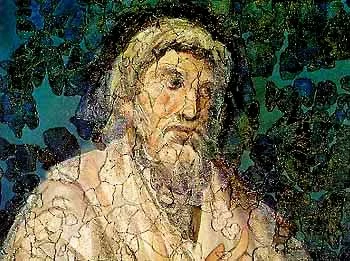
Public domain
Lactantius
250 – 325
Also known as: Lucius Caecilius Firmianus Lactantius, Firmianus, The Christian Cicero
Patristic — Apologetics
Lucius Caecilius Firmianus Lactantius was born a pagan in North Africa in the second half of the third century and taught rhetoric there. Jerome calls him a disciple of Arnobius and records that under Diocletian he was summoned to Nicomedia, the eastern capital, to teach Latin rhetoric. He probably became a Christian there. When Diocletian's first edict against the Christians was issued in 303 he lost his post and fell into poverty, and he wrote his major works in the years of persecution that followed: On the Workmanship of God (303-304) and The Divine Institutes (303-311).
The Divine Institutes, in seven books, was written for educated pagans. Lactantius argues from reason and from their own writers, Cicero above all, rather than from Scripture, which his readers did not accept; in Book V he says this is where Cyprian's reply to Demetrianus fell short, and he names Minucius Felix, Tertullian and Cyprian as the Latin defenders of the faith before him. He later made a shorter version, the Epitome, for his brother Pentadius, and wrote On the Anger of God against the Epicurean view that God is moved by neither anger nor kindness and the Stoic view that he is kind but never angry. On the Deaths of the Persecutors, addressed to the confessor Donatus, tells the story of the persecution and of the deaths of the emperors who ordered it.
In extreme old age, Jerome writes, he was tutor in Gaul to Crispus, the son of Constantine. The date of his death is not known.
His standing
Jerome praised his style, writing that Lactantius "has a flow of eloquence worthy of Tully", and lists his works, several of them now lost: a Symposium written as a young man in Africa, a verse account of his journey from Africa to Nicomedia, the Grammarian, two books to Asclepiades, and books of letters to Probus, Severus and Demetrianus. Theologians were less sure of him; Bishop Bull's verdict that he was a rhetorician rather than a theologian is repeated in the Dictionary of Christian Biography.
Works by Lactantius
Begin with the Epitome of the Divine Institutes, Lactantius's own short version of his main work, made for his brother Pentadius. Then read The Divine Institutes, his seven-book case for Christianity addressed to educated pagans, and On the Anger of God, which carries its argument about God's justice further. On the Deaths of the Persecutors is different in kind: a narrative of the persecution of 303-313 and of the emperors who ordered it.
- The Phoenix 300 – 500
- On the Workmanship of God 303 – 304
- The Divine Institutes 303 – 311
- On the Anger of God 313 – 320
Spurious works
Works that have circulated under Lactantius’s name. Spurious: judged not to be by Lactantius.
Author unknown.
Printed among the works of Lactantius, but the Ante-Nicene Fathers (1886) heads it "formerly ascribed to Lactantius" and notes that no manuscript gives it to him; the Catholic Encyclopedia (1910) judges it the work of a later humanist.
Influence
Who shaped Lactantius, and who Lactantius shaped. Each line is drawn from the research behind the catalogue; the evidence sits in the catalogue, not on this page.
Influenced by
- Marcus Tullius Cicero 106 BCE–43 BCE through The Divine Institutes
- Minucius Felix 150–250 through The Divine Institutes
- Tertullian 160–225 through The Divine Institutes
- Cyprian of Carthage 200–258 responded to through To Demetrian
- Arnobius of Sicca was taught by
- Seneca the Younger ?–65 through The Divine Institutes
Resources
Catalog IDA.3EZN7Q.S