

In copyright · Research complete
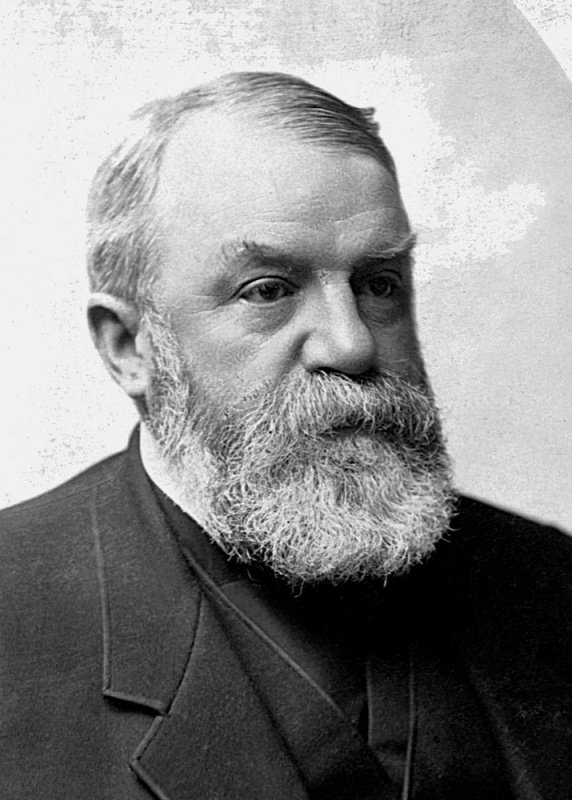
A. W. Tozer
1897 – 1963
Evangelical — Spiritual formation
Aiden Wilson Tozer was born on April 21, 1897, into rural poverty in the Allegheny Mountains of western Pennsylvania, the fifth of six children. His formal education ended after the sixth grade when his family relocated to Akron, Ohio, following a house fire. In Akron he found work at a rubber factory, and it was there — or more precisely, on the walk home from it — that his life turned. A street preacher's words stopped him: "If you don't know how to be saved, just call on God, saying, 'Lord, be merciful to me a sinner.'" He went home, climbed to the attic, and did exactly that. He was seventeen. There was no mentor, no catechism, no pastor to guide what followed — only the Bible, a growing hunger, and secondhand bookshops that would become the real seminary of his life.
Five years after his conversion, without any formal theological training, Tozer accepted a call to pastor a small Christian and Missionary Alliance church that met in a storefront in Nutter Fort, West Virginia. He had recently married Ada Cecelia Pfautz, with whom he would have seven children. The early pastorates — West Virginia, Indiana, Ohio — were modest in scale, but Tozer was building something internally that would eventually overflow into everything he wrote. He read voraciously across theology, philosophy, history, poetry and literature, treasuring especially the older Christian devotional writers. The names he returned to repeatedly included Meister Eckhart, Bernard of Clairvaux, Jan van Ruysbroeck, John of the Cross, William Law, Walter Hilton, François Fénelon, Madame Guyon, and Thomas à Kempis. When asked once how his theological journey differed from that of the great British preacher Martyn Lloyd-Jones, Tozer replied simply: "You came by way of the Puritans. I came by way of the mystics."
In 1928, Tozer accepted a call to the Southside Alliance Church in Chicago, where he served for thirty-one years. Under his guidance the congregation expanded from approximately eighty members to over eight hundred, requiring new facilities by 1941. But the numbers were almost beside the point. What Tozer was building in Chicago was a prophetic ministry — a sustained, uncompromising challenge to what he saw as the church's drift toward entertainment, institutional comfort, and a diminished conception of God. He was slight in stature, soft-spoken, not given to performance. The spiritual weight of his messages and his precision with language held the room. Outside the pulpit he was something close to a recluse. He spent hours each day alone in prayer and reading. He wrote an article for Eternity magazine titled "The Saint Must Walk Alone," which opened: "Most of the world's great souls have been lonely. Loneliness seems to be one price the saint must pay for his saintliness." He was not romanticizing the condition — he was describing his own.
That solitude had a cost his family bore. His biographer James Snyder notes that the scope of his ministry militated against wholesome family life; his children felt estranged from their father, and the estrangement from his wife Ada was particularly pronounced. A year after his death she remarried, and when asked about her happiness she said: "Aiden loved Jesus Christ, but Leonard Odam loves me." It is not a footnote. It belongs in the record of a man whose pursuit of God was as genuine as it was, by ordinary relational measures, costly. He and Ada never owned a car, preferring bus and train travel. Even after becoming a well-known author, Tozer signed away much of his royalties to those in need. The simplicity was real. The complexity was real too.
His Writing and Its Influence
Tozer began writing in 1931 for the Alliance Weekly, the denominational magazine of the Christian and Missionary Alliance, which became the platform from which his writing career emerged. His early output included two biographies commissioned by the denomination, but it was The Pursuit of God, published in 1948, that established his voice for a generation. In May 1950 he became editor of the Alliance Weekly, a position he held until his death. The Knowledge of the Holy followed in 1961 — a short, dense examination of the divine attributes that argued, on its opening page, that what a person thinks about God is the most important thing about them.
Both major works share a single governing concern: that the evangelical church of the twentieth century had traded the weight and terror and beauty of God for something manageable, productive, and essentially trivial. Tozer's engagement with the medieval mystics fed this critique rather than decorating it. He believed that writers like Eckhart, Bernard, and Tersteegen had preserved something about the experiential knowledge of God that the Protestant tradition, in its reasonable efficiency, had largely discarded. This drew criticism from some evangelical quarters who found his sources suspect. The criticism was not groundless, and Tozer himself never claimed to endorse everything he read — but the debate somewhat misses the point of how he read, which was as a hunter looking for whatever illuminated the presence of God, submitting everything to Scripture as the final check. More than forty additional books have been compiled posthumously from his magazine features, editorials, and transcribed sermons, extending a literary legacy that continues in print with Moody Publishers.
Tozer died of a heart attack on May 12, 1963, in Toronto, where he had spent his final years pastoring Avenue Road Church. At his funeral his only daughter said: "I can't be sad. I know Dad's happy. He's lived for this all his life." His grave marker in Akron reads: A Man of God. It is, by his own standards, sufficient.
Works by A. W. Tozer
Begin with The Pursuit of God, the short book that made his name and holds his central theme of seeking God himself. Then read The Knowledge of the Holy on the attributes of God, and The Divine Conquest, its companion on God's pursuit of man; the editorial collections such as The Root of the Righteous can be read a chapter at a time after that.
- Let My People Go 1947
- Pursuit of God 1948
- Divine Conquest 1950
- Born After Midnight 1959
- Of God and Men 1960
- The Counselor 1968
- I Call It Heresy! 1974
- Echoes from Eden 1981
- Men Who Met God 1986
- Paths to Power 1986
- The Set of the Sail 1986
- Faith Beyond Reason 1987
- Jesus Is Victor! 1989
- The Price of Neglect 1991
- Rut, Rot or Revival 1992
- Size of the Soul 1992
- The Early Tozer 1997
- The Purpose of Man 2009
- A Disruptive Faith 2011
- The Crucified Life 2011
- Voice of a Prophet 2014
- Delighting in God 2015
- Alive in the Spirit 2016
- No Greater Love 2020
- Authentic Worship 2023
About & Related Works
Works about A. W. Tozer, plus compilations, editions and commentary — offered as resources, not as their own writing.
Influence
Who shaped A. W. Tozer, and who A. W. Tozer shaped. Each line is drawn from the research behind the catalogue; the evidence sits in the catalogue, not on this page.
Influenced by
- Anonymous (The Cloud of Unknowing) 1350–? through Pursuit of God
- Thomas à Kempis 1380–1471 through Pursuit of God
- Nicholas of Cusa 1401–1464 through Pursuit of God
- A. B. Simpson 1843–1919
Influenced
- Leonard Ravenhill 1907–1994 through Why Revival Tarries
Resources
Catalog IDA.SKKERP.9